WeFi Ecosystem
ITO: WeFi's Initial Technology Offering
ITO is WeFi's mechanism for putting $WFI into circulation. No proof-of-work hardware. Activate ITO node software, and the protocol starts emitting WFI algorithmically. Stage 1 runs at 8 WFI per block per second.
Get ITO Mining Units →
Key Takeaways
- ITO = Initial Technology Offering. WeFi's model for distributing $WFI through software node activation.
- ITO Mining Units are software infrastructure products, not mining hardware.
- 1,000,000,000 WFI total supply. 8-year emission schedule. Halving every 2 years.
- Stage 1 current: 8 WFI per block per second. Stage 2 drops to 4 WFI.
- Activation is irreversible. Nodes amortize algorithmically over time. That's the design.
- Pay with fiat (bank transfer, SWIFT, SEPA, Apple Pay) or crypto.
Quick Facts: ITO
What is ITO
What is the Initial Technology Offering?
ITO stands for Initial Technology Offering. It's WeFi's model for distributing $WFI without proof-of-work mining or hardware. You activate ITO node software through the WeFi platform, and the protocol emits WFI algorithmically according to a fixed schedule. Supply is hard-capped at 1 billion. Note the name: it's Initial Technology Offering, not 'Initial Token Offering.' That misreading changes the meaning. The 'Technology' framing is deliberate.
ITO is not a fundraising mechanism in the ICO sense. It's a technology bootstrapping system. Each ITO unit represents a measure of computing power on the WeChain network. Think of the compute units data centers use to quantify processing capacity. Activating a unit contributes that capacity to the network, and in return the protocol distributes WFI on a fixed schedule. Nodes amortize over time. Mining output decreases algorithmically. That's the design.
ITO Nodes
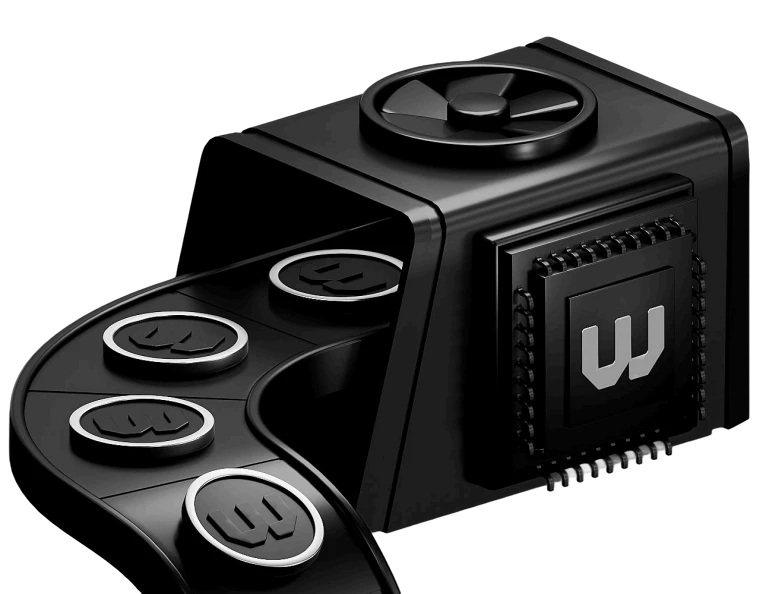
ITO Nodes: the engine of WeFi
ITO Nodes are the first product in the WeFi ecosystem. Each activated node mines WFI, runs on WeChain's network, and enables referral rewards. Over time, ITO units can be redeemed for Lite Nodes that validate the WeChain network.
Mines $WFI from the next block once activated
Runs on WeChain's node network
Enables referral rewards across the network
Can be redeemed for WeChain Lite Node participation
Supports AI-powered KYC, remittances, and fintech automation on WeChain
Mining mechanics
How WFI mining works
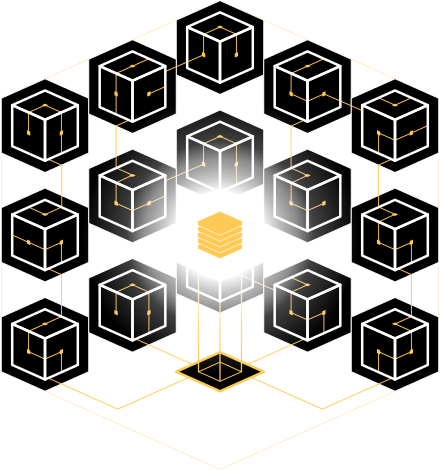
WFI uses Proof-of-Stake consensus, but emission follows a transparent algorithmic schedule. Everyone can see exactly how much WFI enters circulation and when. WFI launched on BNB Smart Chain at the November 2024 Token Generation Event and is scheduled to migrate to WeFi's own WeChain once mainnet is live. Until then, parts of the node-validation model remain in rollout.
Stage 1
Years 0–2
8 WFI/block/s
503,884,800 WFI total
Stage 2
Years 2–4
4 WFI/block/s
251,942,400 WFI total
Stage 3
Years 4–6
2 WFI/block/s
125,971,200 WFI total
Stage 4
Years 6–8
1 WFI/block/s
62,985,600 WFI total
Step-by-step
How to activate ITO and start mining
Create WeFi account
Register on the WeFi app. Complete KYC verification to access ITO activation.
Fund your account
Deposit via fiat (bank transfer, SWIFT, SEPA, Apple Pay, Google Pay) or crypto.
Purchase ITO units
Navigate to the ITO section. Select activation size. Larger single activations carry a higher Pool Coefficient.
Activate
Confirm activation. The action is irreversible. Mining starts from the next block.
Important: Activation is irreversible. Once ITO units are activated, they cannot be recovered or refunded. Nodes amortize algorithmically. Mining output decreases over time. Verify all details through official WeFi channels before activating.
Payment methods
How to pay for ITO units
ITO vs ICO vs IDO
How ITO differs from ICO and IDO
ITO is purpose-built for technology bootstrapping, not capital fundraising. The differences are structural.
| Aspect | ICO | IDO | ITO (WeFi) |
|---|---|---|---|
| Full name | Initial Coin Offering | Initial DEX Offering | Initial Technology Offering |
| Primary purpose | Capital fundraising | Token launch on DEX | Technology bootstrapping + token distribution |
| Hardware needed | N/A | N/A | No — software only |
| Mining rewards | No | No | Yes — algorithmic emission |
| Duration | One-time event | One-time event | 8-year schedule with halving |
| Community participation | Token holders | Token holders | Node operators + validators |
Protocol mechanics
Four rules governing WFI emission
WFI emission follows four algorithmic rules. They interact to manage supply release, maintain fairness, and prevent token concentration.
Systematic Halving
Emission cuts in half every two years: 8 → 4 → 2 → 1 WFI per block per second. Total supply approaches 1 billion but never exceeds it.
Algorithmic Amortization
Each ITO unit has a lifecycle. Mining output decreases algorithmically over time. To maintain output levels, activate additional units.
Pool Coefficient
A single $1,000 activation is more efficient than four $250 activations. The coefficient rewards larger single-activation sizes.
Mathematical Supply Control
Energy burn acts as a guardrail on emission. The more the ecosystem burns Energy, the more controlled the supply curve stays.
Pool Coefficient by activation size
| Activation size | Pool coefficient |
|---|---|
| $50 | 1.0× |
| $100 | 1.2× |
| $250 | 1.5× |
| $500 | 2.0× |
| $1,000 | 3.0× |
Source: WeFi GitBook 2.5 — Algorithmic Mining Rules. Coefficient applied at activation, not retroactively.
Limits & risks
What to weigh before activating
DeoFin is independent and not affiliated with WeFi. ITO is software node activation, not an investment product. These are the constraints most launch coverage leaves out.
Activation is irreversible
Once activated, ITO units cannot be refunded, recovered, or deactivated. There is no cooldown and no reversal path. Treat activation as final.
Output decreases by design
Algorithmic amortization means each unit's WFI output falls over its lifecycle, and halving cuts the network rate every two years. Early output is not sustained output.
WeChain mainnet is not fully live
WFI still runs on BNB Smart Chain pending migration to WeChain. Node validation, native gas utility, and parts of the model depend on infrastructure still rolling out.
No price or return guarantees
Mined WFI has no guaranteed value. Token price, exchange availability, and future utility can all change. Nothing here is financial advice. Verify through official WeFi channels.
Ecosystem connections
Where ITO connects in the WeFi ecosystem
ITO is the primary distribution channel for $WFI. Every WFI in circulation outside staking and liquidity allocations comes through ITO node activation. WeChain, Energy, and the WeFi Card all connect back to the token ITO distributes.
$WFI Token
ITO is the primary mechanism putting WFI into circulation. 86.2% of total supply distributes through node activation.
WeChain
ITO nodes participate in WeChain's node network. Units can be redeemed for Lite Nodes that validate the chain.
Energy
WFI mined through ITO can be held to generate Energy, which reduces WeFi Card transaction fees from 3% to 1.5%.
WeFi Card
Card fees depend on Energy balance. Energy comes from holding WFI. WFI comes from ITO. The chain runs from node activation to fee reduction.
Start mining $WFI in Stage 1
Activate your ITO units while emission runs at 8 WFI per block per second. Open your account and start today. ITO units are software infrastructure products, not investment instruments.
Open WeFi appFAQ
Common questions about ITO
Written by DeoFin Editorial · Published May 21, 2026
Primary source: official WeFi GitBook. DeoFin is an independent resource, not affiliated with WeFi Technologies Ltd. About DeoFin ->
External references