Deone Vault
Deone's Vault and Physical Key, Explained
A cold storage product accessed only through a dedicated NFC hardware device. No app-only access, no cloud recovery. Here's the full spec sheet, what happens when you lose a device, and what this setup doesn't protect against.
Back to the Deone overviewIndependent overview. Not affiliated with WeFi or Deone.
What It Is
A custody product, separate from the card
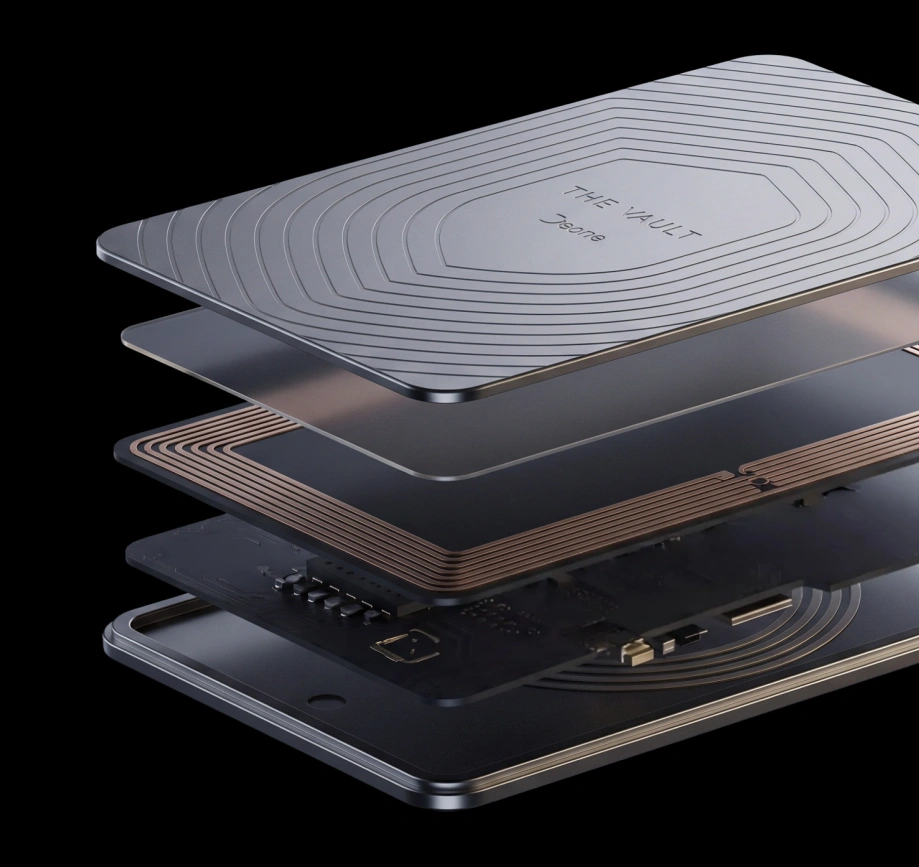
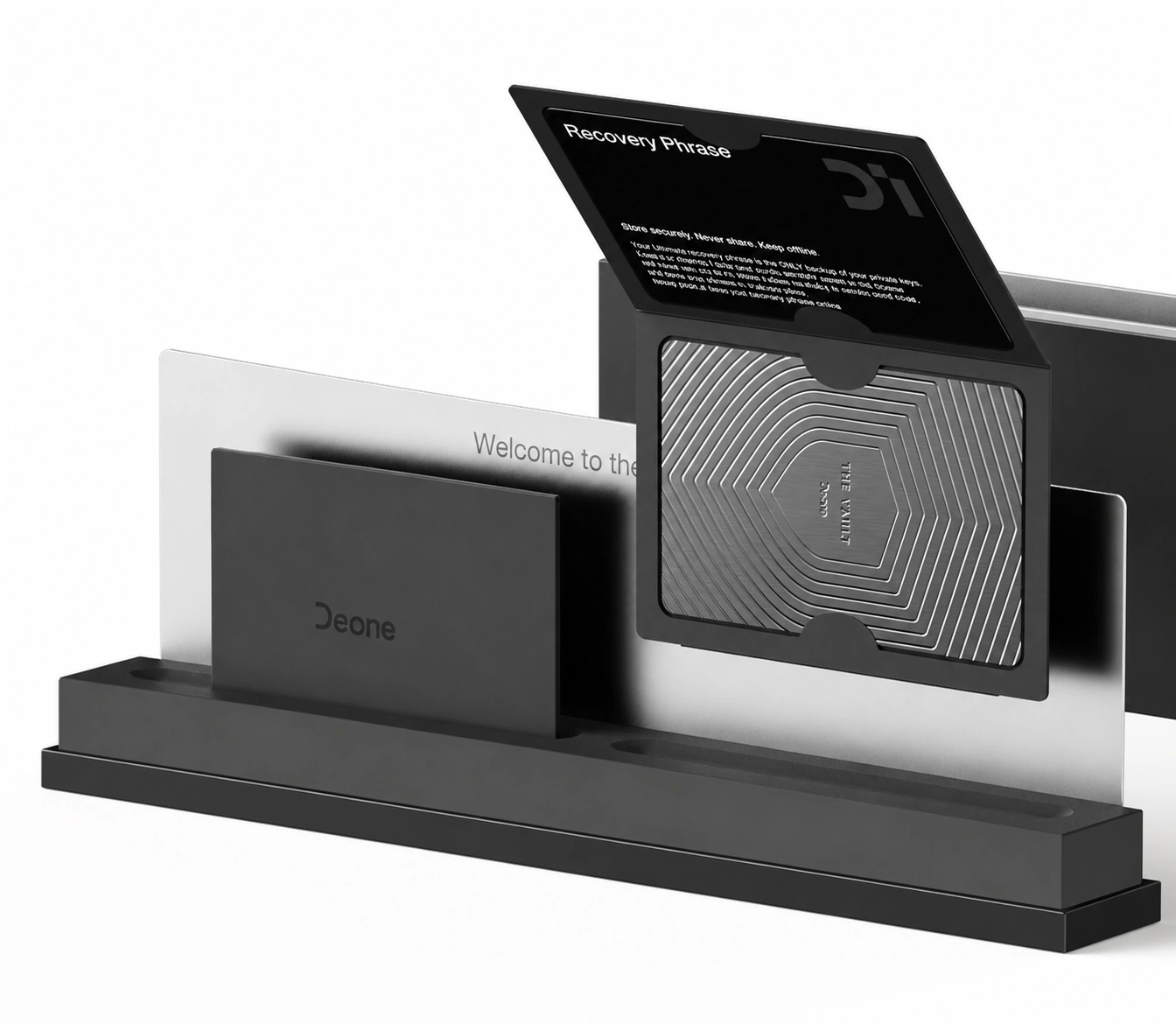
The Vault is Deone's self-custody cold storage product. It has nothing to do with the tokenized payment card. Access runs through a separate piece of hardware called the Physical Key, an NFC card-shaped device that pairs with the Deone App. Deone's materials state that neither Deone nor any third party can access what's stored inside without the Physical Key present. This is built to hold assets long-term, not to process everyday transactions.
Available from Prestige tier: one Physical Key included
Executive tier ships two Physical Keys, meant as an independent backup you can store in a different location
Setup takes a few minutes: tap the Physical Key to your phone once to activate
The device resets after 3 incorrect PIN attempts; your recovery phrase is the only way back in after that
Technical Specifications
The full spec sheet
This is the complete technical table from Deone's product materials. Two entries are worth reading closely before the rest of the page: the key standard and the certification level.
| Property | Specification |
|---|---|
| Material | 0.3mm treated stainless steel |
| Connectivity | Passive NFC, no battery required |
| Key generation | True Random Number Generator (TRNG) |
| Key standard | EIP-2333 |
| Recovery phrase standard | BIP-39 mnemonic, 24 words |
| PIN storage | On the device only, never in the app or on the phone |
| Failed PIN attempts before wipe | 3 |
| Secure element certification | CC EAL6+ |
| Additional certifications | FIDO2 Certified (Level 3), SOC 2 Type II Audited |
CC EAL6+ is a higher assurance level than the CC EAL5+ certification on Deone's payment card. It rates the hardware itself, not Deone's app, backend, or account-recovery process.
Why EIP-2333, specifically
EIP-2333 (and its companion EIP-2334) is a real Ethereum standard, confirmed on Ethereum's own EIPs repository. It defines key derivation for BLS12-381 signatures, the scheme used for Ethereum validator and staking keys. Most consumer hardware wallets use BIP-32 or BIP-44 instead, which is the more common derivation path for everyday crypto storage. Deone's materials don't explain why a payment and custody product uses a staking-oriented key standard rather than the more typical BIP-32/BIP-44 path. It may be a deliberate choice tied to future staking support, or the term may simply be listed without a specific reason behind it. Either way, it's not explained publicly, and it's worth asking about directly if key-standard compatibility matters to you.
Setup & Recovery
What happens when something goes wrong
The Vault uses what Deone calls split-knowledge architecture: the app and the Physical Key both have to be present to access funds. Losing one piece doesn't automatically lock you out, but which piece you lose changes what you need to do next.
You lose your phone, but still have the Physical Key
Reinstall the Deone App on a new phone and pair it with your existing Physical Key. The Key itself holds no phone-specific data.
You lose the Physical Key, but still have your phone and recovery phrase
Deone's materials describe the 24-word BIP-39 recovery phrase as the way back into a Vault. A lost Physical Key on its own isn't an automatic lockout if you have the phrase, though Deone's public materials don't spell out the exact replacement-device process.
You enter the wrong PIN three times
The device wipes itself. Deone describes the recovery phrase as the only way to restore access after that point.
You're on Executive tier and lose one of two Physical Keys
The second Key, stored separately as Deone recommends, still works on its own. This is the specific reason Executive ships two devices instead of one.
You lose the Physical Key and the recovery phrase together
Deone's materials don't publish a recovery path for this case. Treat the recovery phrase as being at least as critical to protect as the Physical Key itself, not a secondary backup you can be casual about.
The Honest Limit
What the Vault doesn't protect against
Deone's marketing draws a comparison to USB-based hardware wallets, framing factory-locked firmware as eliminating a vulnerability those devices carry. That's a real, specific advantage: a device whose firmware can't be modified after manufacturing closes off one class of attack that USB-connected devices can be exposed to through firmware updates. It is not the same as saying the Vault has no attack surface at all. The risks that remain are ordinary rather than exotic: someone gets physical possession of the device, or a backup gets mishandled somewhere along the way. Plain human error covers most of what's left. No certification or clever hardware design removes any of that.
Physical theft of the device and knowledge of the PIN together would compromise the Vault. The 3-attempt wipe limits guessing, not theft of a device where the PIN is already known
Deone doesn't document a recovery path for losing the recovery phrase and the Physical Key at the same time
Coercion (someone forcing you to tap the Key and enter your PIN) isn't something hardware certifications address, on this device or any other
The two-device setup on Executive tier only helps if the devices are actually stored apart. Keeping both Physical Keys in the same house defeats the point of having two
This is a structural read of Deone's own published materials, not an independent security audit. DeoFin has not tested the Physical Key or the Vault directly.
Frequently Asked Questions
See the full Deone breakdown
Membership tiers, legal structure, the tokenized card, and Cloud Mining: the complete picture on the Deone hub page.
Back to Deone overviewIndependent overview. Not affiliated with WeFi or Deone.
Last updated
July 2026
DeoFin is an independent informational resource. Not affiliated with WeFi Technologies Ltd. or Deone. Nothing on this site constitutes financial or security advice. Product and technical details sourced from Deone's public materials and Ethereum's public EIP repository, and may change without notice — verify through official channels before making decisions.