Deone Card
Deone's Tokenized Card, Explained
No printed card number, no CVV, no expiry date. Deone's card carries an encrypted token instead. Here's what that actually means, what the certifications behind it mean, and what it doesn't protect you from.
Back to the Deone overviewIndependent overview. Not affiliated with WeFi or Deone.
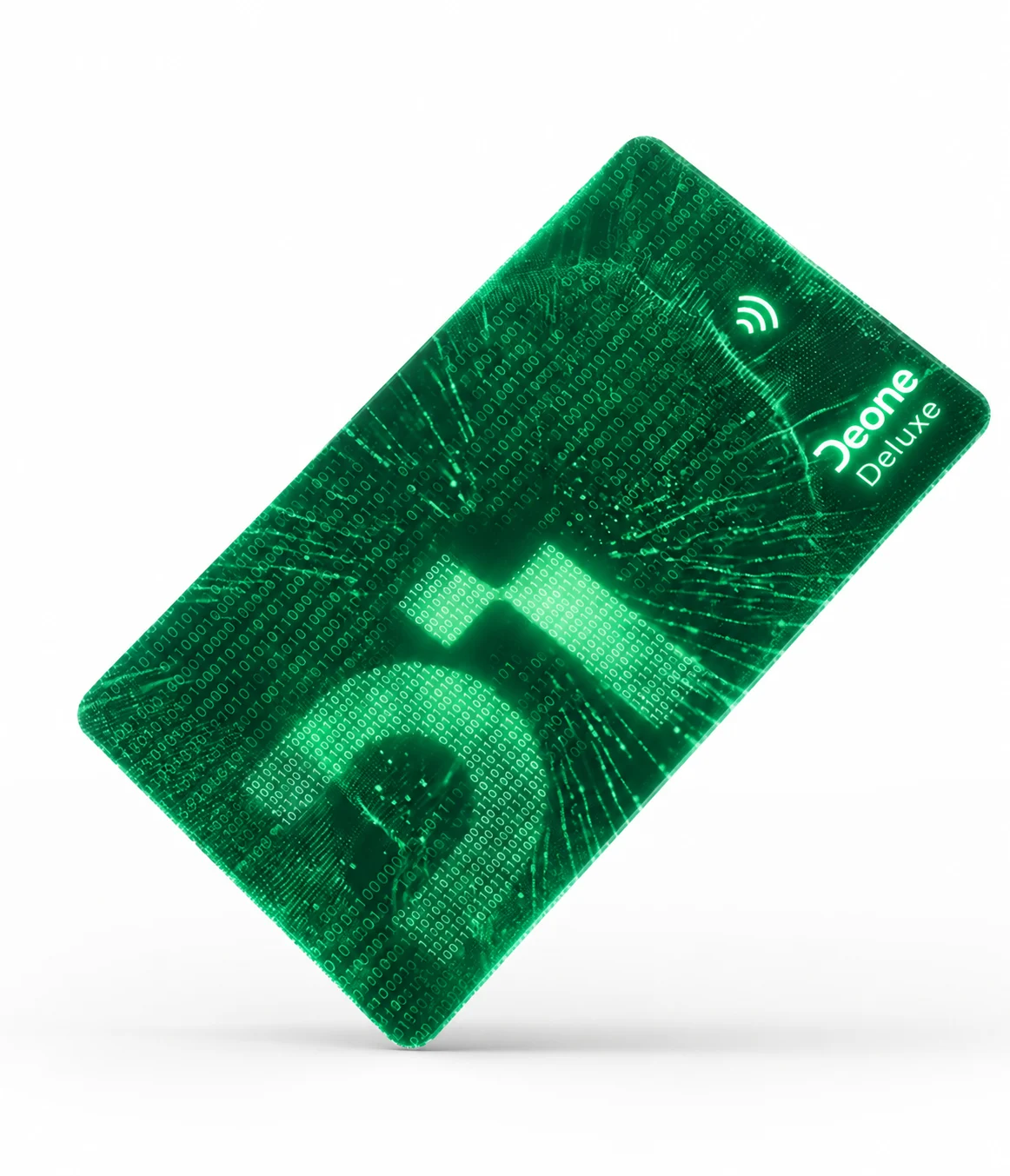
How It Works
Device tokenization, not a card number in your pocket
A standard card carries your real account number (PAN), CVV, and expiry date printed on the plastic and stored in the chip: static data that stays valid until the card is reissued. Deone's card doesn't. When a Deone card is issued, a device tokenization service generates a device-specific token tied to that one physical chip. The token is embedded in the NFC chip during setup inside the Deone App. Nothing on the card's surface identifies the underlying account.
No PAN, CVV, or expiry printed on the card or exposed in the chip
The token only works for that specific device, so it has no value if intercepted and used elsewhere
Every tap generates a one-time transaction cryptogram through the EMV contactless protocol. The code can't be replayed or reused
The NFC antenna only responds within roughly 3cm, which limits ambient or relay-style reading attempts
It's the same idea behind tokenized mobile-wallet payments like Apple Pay and Google Pay: a device-bound token standing in for the real card number, just applied to a physical card instead of a phone.
Certifications Explained
What the badges on the card actually mean
Deone's card materials cite three certifications. None of them are Deone-specific. They're independent chip and payment-industry standards, which is exactly why they're worth checking rather than taking on faith.
| Certification | What It Means | Everyday Analogy |
|---|---|---|
| CC EAL5+ | Common Criteria Evaluation Assurance Level 5+, an internationally recognized hardware security rating. The secure element inside the chip is built on Infineon's SECORA Pay platform, an existing, independently verifiable Infineon product line (confirmed on Infineon's own site) certified to CC EAL5+ with EMVCo compliance. | The same assurance level used in passport chips and SIM cards. It rates the hardware itself, not Deone's app or backend. |
| PCI DSS | Payment Card Industry Data Security Standard: the baseline standard for any system handling card data. Deone's materials cite this compliance for 'the tokenization platform' without naming which of its legal entities is the actual PCI DSS-compliant processor. See the operating structure on the Deone overview page for the full entity breakdown. | Table-stakes for any payment processor; being compliant doesn't mean a system is unhackable, just that it meets minimum industry security requirements. |
| PCI-CP | PCI Card Production standard: governs the physical and logistical security of how cards are manufactured and personalized, not just the software. | Covers the factory and supply chain, not the app. |
Certifications describe the hardware and manufacturing process. They don't independently verify Deone's own app, backend, or account-recovery security. None of that is covered by CC EAL5+, PCI DSS, or PCI-CP.
Materials by Tier
Same tokenization, different card
Every tier uses the same tokenized chip architecture. What changes tier to tier is the physical card: material, construction, and whether a second device ships alongside it.
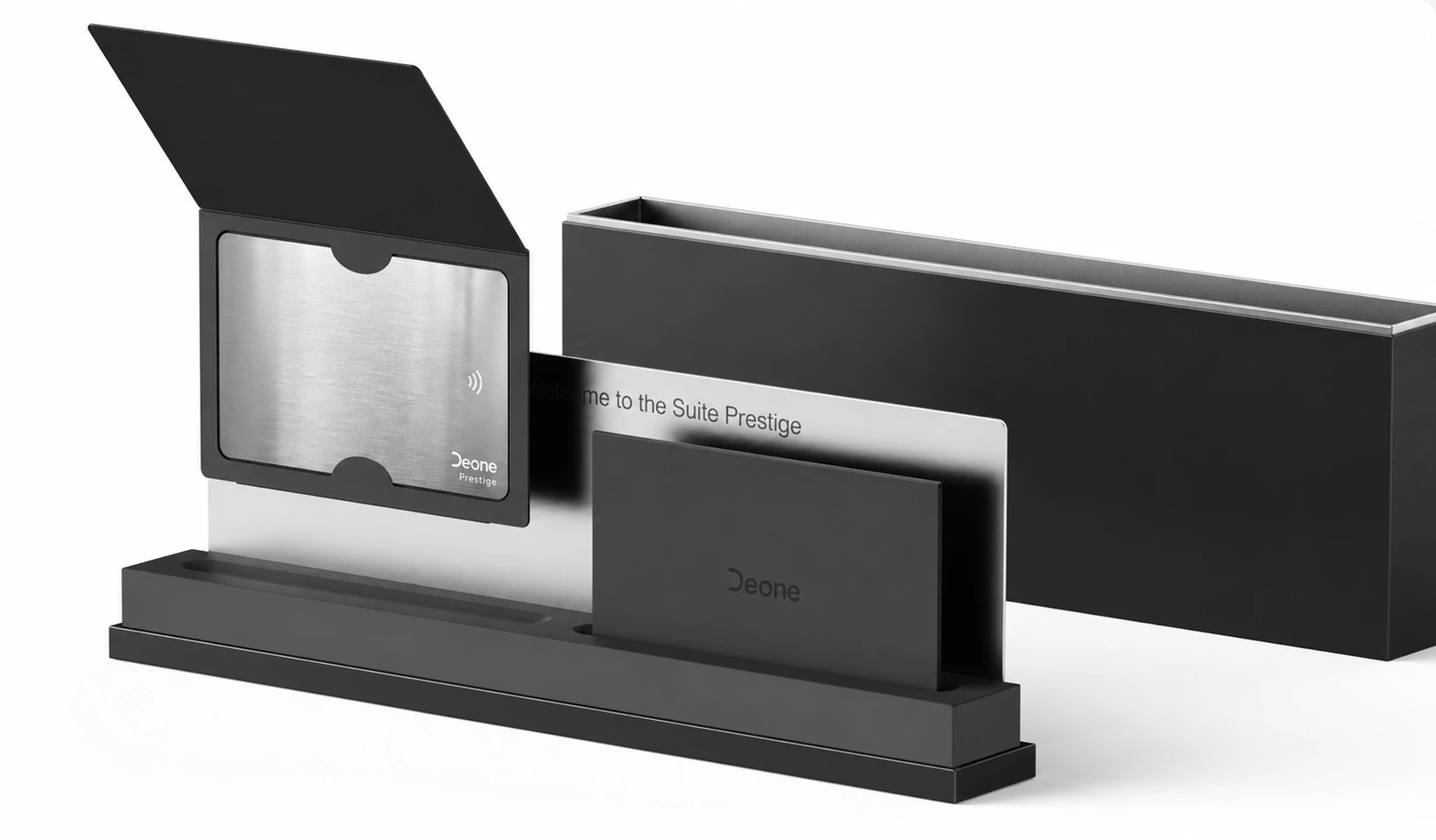
| Tier | Material | Construction | Extra Device |
|---|---|---|---|
| Deluxe Suite | Plastic (green) | Standard card-body injection molding | None |
| Prestige Suite | Full metal (brushed stainless-steel style) | Metal card body with embedded chip and antenna | None |
| Executive Suite | Ceramic-metal composite, ~22 grams | Precision CNC-machined and laser-engraved; ceramic-metal composite is the same class of material used in high-end watch bezels, harder than stainless steel and more resistant to scratching and wear. Integrating an EMV chip and contactless antenna into a ceramic-metal body is a more complex manufacturing process than standard plastic or metal cards. | Payment Bracelet: a wearable version of the same tokenized chip, in a woven-cord band |
Manufacturing and material claims are sourced from Deone's own product materials and haven't been independently tested by DeoFin.
The Honest Limit
What tokenization doesn't protect against
Tokenization protects card data at rest and in transit. The token itself is close to worthless if intercepted. It does not change what happens once a transaction is authorized, or what happens if someone gets into your account another way. Deone's own materials draw a sharp distinction here that's worth taking seriously: a traditional bank can step in. It can freeze a suspicious transaction, or reverse a fraudulent charge after the fact, and it can do that days later, not just in the moment. Deone's card is connected to a non-custodial onchain account. Deone states no institution can freeze or reverse a transaction on your behalf. That's the trade-off of full custody, and it cuts both ways.
A tokenized chip doesn't stop phishing, social engineering, or someone getting your app credentials directly
Deone's materials describe onchain transactions as irreversible, so there's no chargeback-style safety net once a transaction clears
Tokenization secures the card's data channel, not your recovery phrase, PIN, or device passcode. Those remain the actual attack surface
The certifications above rate the chip and manufacturing process; see the caveat above for what they don't cover
This is a structural description based on Deone's own materials, not a security audit. DeoFin has not independently tested Deone's tokenization implementation.
If You Lose It
Losing your card vs. losing your Payment Bracelet
Deone's materials only spell out a specific loss-recovery flow for the Payment Bracelet (Executive tier): lose it, and blocking it instantly in the Deone App disables the token immediately. Nothing on the physical device can be used or cloned after that. The same public materials don't describe an equivalent step-by-step process for a lost physical card specifically.
Payment Bracelet: block-and-disable flow confirmed in Deone's product materials
Physical card: no separate lost-card procedure is documented in Deone's public materials. It likely mirrors standard card-blocking via the app, but this isn't confirmed
Either way, the token itself carries no value once disabled, since it's tied to that one device
Verify the exact lost-card process directly with Deone before relying on it. This isn't independently confirmed.
Frequently Asked Questions

See the full Deone breakdown
Membership tiers, legal structure, Cloud Mining, and Vault custody: the complete picture on the Deone hub page.
Back to Deone overviewIndependent overview. Not affiliated with WeFi or Deone.
Last updated
July 2026
DeoFin is an independent informational resource. Not affiliated with WeFi Technologies Ltd. or Deone. Nothing on this site constitutes financial or security advice. Product and certification details sourced from Deone's public materials and Infineon's public product pages, and may change without notice — verify through official channels before making decisions.